

"There was no ARSA and no armed Rohingya group,” Mohammed Aziz stated. “So why were our families expelled from Arakan? Why were civilians massacred?”
- Rohingya Culture advocacy Cent
- Jan 20
- 5 min read
Report by Rohingya Journalist Saiful Arakani Cox’s Bazar.
more than three decades, Mohammed Aziz has lived a life shaped by forced displacement, statelessness, and the denial of basic human rights an experience shared by generations of Rohingya civilians targeted by Myanmar’s military government.
Genocide Before Any Armed Group: 1978 and 1991 According to Mohammed Aziz, the Myanmar (Burmese) military government carried out mass violence against Rohingya civilians in both 1978 and 1991 in Rakhine State (Arakan). These military campaigns targeted unarmed civilians, including his own family.
In 1978, during the military operation commonly known as Operation Naga Min (Dragon King), Rohingya civilians were subjected to widespread killings, rape, arrests, and forced expulsions. Hundreds of thousands were driven into Bangladesh.
Again in 1991–1992, the Myanmar military launched another wave of violence, forcing Rohingya families including Mohammed Faisal’s parents to flee their homeland to survive.
“At that time, there was no ARSA and no armed Rohingya group,” Mohammed Aziz stated.
“So why were our families expelled from Arakan? Why were civilians massacred?”
Myanmar’s military has told the International Court of Justice (ICJ) that its actions in Rakhine State were a response to attacks by ARSA on Border Guard Police (BGP) checkpoints.
However, this claim collapses under the facts.
In 2012, there was no ARSA operating in Rakhine State (Arakan). Yet the Myanmar military carried out widespread violence against Rohingya civilians, including killings, mass displacement, and the destruction of villages.
If the military’s actions were truly a response to ARSA, a clear question arises: Who were they retaliating against in 2012?
By presenting its actions to the ICJ as counterterrorism or retaliation, Myanmar has misinformed the Court and the international community, shifting blame onto the victims and concealing decades of systematic persecution.

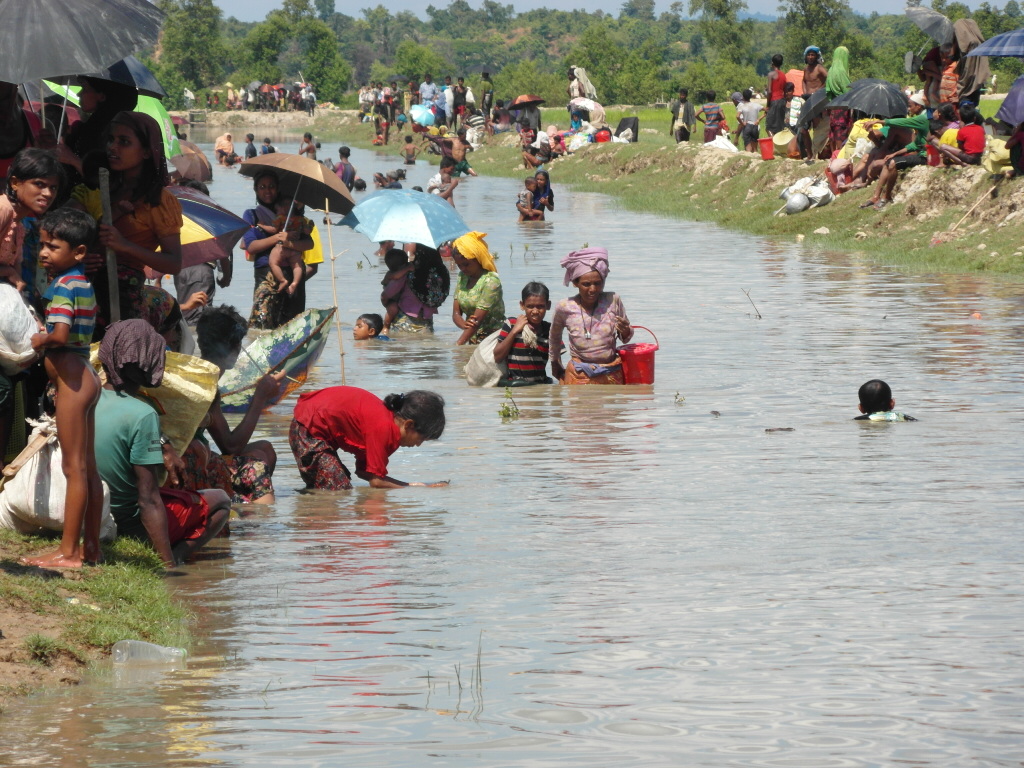
Picture By Saiful Arakani in Nayapara Registered Camp 1991.
Collective punishment of civilians is illegal under international law. Genocide cannot be justified as a security operation.
The evidence shows intent, continuity, and state responsibility not self-defense.
The Rohingya who were expelled during those periods are still living as refugees in Bangladesh today and have never been allowed to return to their own country. Decades have passed, yet they remain forcibly displaced, denied citizenship, and excluded from their homeland, demonstrating that the crimes committed against them were not temporary security measures but part of a permanent policy of removal.
He emphasizes that these atrocities occurred decades before the Myanmar military began using armed groups as an excuse to justify its actions. The Rohingya community at that time consisted of farmers, elders, women, and children, none of whom posed any threat to the state.

Picture by Saiful Arakani 1991 Nayapara Registered Camp.
Born a Refugee, Deprived of Rights
Mohammed Aziz was born in a refugee camp in Bangladesh and spent 35 years of his life there without nationality, legal identity, or state protection. Because he was born a refugee, he was denied nearly all fundamental rights guaranteed under international law.
“Because I was born a refugee, I had no basic rights,” he said. He was deprived of: the right to nationality, after Myanmar stripped Rohingyas of citizenship the right to education, as access to formal schooling was severely restricted the right to freedom of movement, both inside and outside the camps
The right to equal legal protection, leaving refugees vulnerable and voiceless the right to dream, including his ambition to become a lawyer.
“I hoped to become a lawyer,” he said.
“But because I was born a refugee without citizenship, that dream was taken from me.”
Forced to the Sea by Statelessness
For decades, Rohingya communities have been forced to live as refugees, and every year our people die at sea. Rohingya men, women, and children become victims of human traffickers, smugglers, and criminal networks, not by choice, but by desperation.
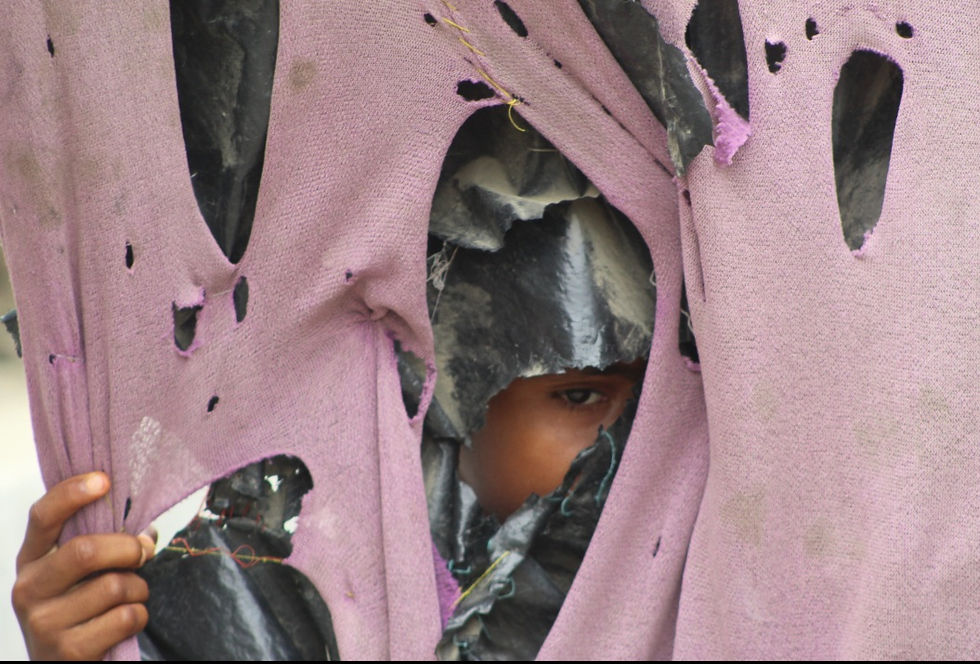
Picture by Saiful Arakani 1991 Kutupalong Registered Camp.
If Rohingyas had been allowed to remain in their own country, they would have had citizenship, passports, and legal pathways to travel like other people around the world. They would have applied for visas, boarded airplanes, and moved safely and lawfully between countries.
Instead, because Myanmar stripped them of nationality and expelled them from their homeland, Rohingyas were denied these basic protections.
Statelessness has pushed Rohingyas onto dangerous boats. Without citizenship rights, they are forced to risk their lives at sea, crossing borders irregularly, only to become stranded in places like Malaysia and Indonesia, where many remain undocumented, exploited, detained, or abused.
Every year, more Rohingyas drown, disappear, or are trafficked not because of choice, but because the state that should have protected them chose to erase them.

Picture by Saiful Arakani 1991 Kutupalong Registered Refugee Camp.
“These deaths at sea are not accidents,” Mohammed Azizsaid. “They are the direct result of state policies that denied us citizenship, freedom of movement, and legal identity.” “We did not choose the sea. We were driven to it.”
A Pattern of State Policy, Not Security Operations Mohammed Aziz rejects the claim that violence against Rohingyas was a response to security threats. He states that civilians were never at fault and that collective punishment was applied solely because of ethnic and religious identity.
“Even if there were an armed group, punishing civilians is a crime,” he said.
“But in 1978 and 1991, there was no such group. What happened was not security it was state policy.” He describes how Rohingya villages were destroyed, families torn apart, and civilians subjected to extreme violence simply because they were Rohingya. These acts, he argues, demonstrate clear intent to permanently remove the Rohingya people from Myanmar.

Rohingya fleeing genocide and trapped at the border Between Myanmar and Bangladesh Border.
“Our homes were destroyed, our women violated, our men killed, and our children burned,” he said. “We never went against the Burmese military. We were civilians.”
The ICJ and State Responsibility these experiences are now reflected in proceedings at the International Court of Justice (ICJ), where Myanmar stands accused of violating the Genocide Convention.
The case highlights that violence against the Rohingya did not begin recently but is the result of decades of systematic persecution, exclusion, and forced displacement, including the genocidal campaigns of 1978 and 1991.
Mohammed Faisal believes the ICJ case must recognize this long history of state responsibility.
“The government is responsible for what they did to us,” he said. “They created refugees by destroying our lives.”
Today, Mohammed Aziz continues to advocate for accountability, justice, and recognition of the Rohingya people’s rights. He stresses that no child should be born without nationality, education, or a future because of state-sponsored persecution.
“We did not choose to be refugees,” he said.
“We were made refugees.” As the ICJ proceedings continue, his story stands as a reminder that the Rohingya crisis is not a sudden tragedy, but the result of deliberate, long-term state policies that stripped an entire people of their rights, identity, and homeland.
“We want justice. We want citizenship.
And we want to return to Arakan State.”


✊🏽